
Finding the best weight loss programs for beginners can feel overwhelming. One plan tells you to avoid carbohydrates, another recommends fasting, and a third promises fast results from intense daily workouts. With so much conflicting advice, it is difficult to know where to begin.
The good news is that a successful weight loss program does not need to be extreme. A practical combination of balanced meals, enjoyable physical activity, strength training, and consistent habits can help you manage your weight over time. This guide explains how to choose a realistic approach and includes a flexible four-week beginner plan you can adapt to your fitness level.
What Are Weight Loss Programs?
Weight loss programs are structured approaches that help people manage their body weight through changes in eating habits, physical activity, and everyday behavior. Some programs are self-directed, while others include coaching, professional supervision, or group support.
A useful program should provide more than a list of foods to avoid. It should help you understand portions, plan meals, stay active, monitor progress, and respond to setbacks without abandoning your routine.
The most effective approach is usually one that matches your schedule, preferences, budget, and health needs. A program you can follow consistently is more valuable than a strict plan you abandon after a few days.
Why a Sustainable Weight Loss Plan Matters
Weight management is about more than a number on the scale. For people carrying excess body weight, gradual weight loss may improve certain health markers, including blood pressure, blood sugar, and cholesterol.
According to the Centers for Disease Control and Prevention, people who lose weight gradually, around one to two pounds per week, are generally more likely to maintain that loss than those who lose weight rapidly.
That range is not a required weekly target. Progress varies, and some people may need a different approach based on their health, medications, or starting point.
Signs of a Practical Program
- It encourages balanced meals rather than starvation.
- It includes physical activity appropriate for your ability.
- It supports strength and muscle maintenance.
- It allows flexibility for work, family, and social occasions.
- It measures progress through habits as well as body weight.
- It avoids guaranteed results or unrealistic deadlines.
How Weight Loss Works
Body weight is influenced by several factors, including food intake, physical activity, sleep, genetics, medications, and health conditions. Weight loss generally occurs when the body uses more energy than it receives over time, creating an energy deficit.
However, simply eating as little as possible is not a good strategy. Severe restriction can make it difficult to obtain essential nutrients, affect training performance, and increase the risk of losing muscle.
A more sustainable approach is to make manageable adjustments, such as choosing water instead of sugary drinks, adding vegetables to meals, reviewing portion sizes, and becoming more physically active.
As body weight changes, energy needs can also change. That is one reason progress may slow after an initial period of weight loss.
Best Weight Loss Programs for Beginners
There is no single program that works best for everyone. The following approaches can support weight management when they are matched to personal needs and followed consistently.
1. Balanced Eating and Portion Control
This approach focuses on nutritious meals, appropriate portions, and gradual improvements rather than banning entire food groups.
For many beginners, it is an accessible starting point because familiar foods can remain part of the diet. The main changes involve how often certain foods are eaten, how meals are balanced, and how portions are managed.
2. Walking and Low Impact Exercise
Walking is an inexpensive and flexible activity that can be adjusted to different fitness levels. Beginners can start with short walks and gradually increase duration or pace.
Cycling, swimming, and low-impact home workouts are other options, especially for people who find high-impact exercise uncomfortable.
If ordinary workouts feel too demanding, see our Beginner Workout Plan for Overweight People for gentler exercise ideas.
3. Cardio Combined With Strength Training
Cardio activities improve cardiovascular fitness and increase energy expenditure. Strength training helps maintain muscle and improve physical function during a weight loss program.
These activities work well together. You do not have to choose between walking and lifting weights. A simple weekly routine can include both.
4. Professionally Supported Weight Management
Some people benefit from working with a registered dietitian, qualified fitness professional, or healthcare team. This may be especially useful when previous attempts have been unsuccessful or when medical conditions affect weight management.
Professional programs can provide individualized goals, nutritional guidance, progress reviews, and support with behavior changes.
Comparison of Beginner Weight Loss Approaches
| Approach | Main Focus | Best Suited For |
|---|---|---|
| Balanced eating | Food quality and portions | Beginners who want flexible meals |
| Walking program | Gradual daily movement | People starting from low activity levels |
| Cardio and strength | Fitness and muscle maintenance | People who want a structured exercise routine |
| Professional support | Individual guidance and accountability | People with complex needs or recurring difficulties |
4 Week Weight Loss Program for Beginners
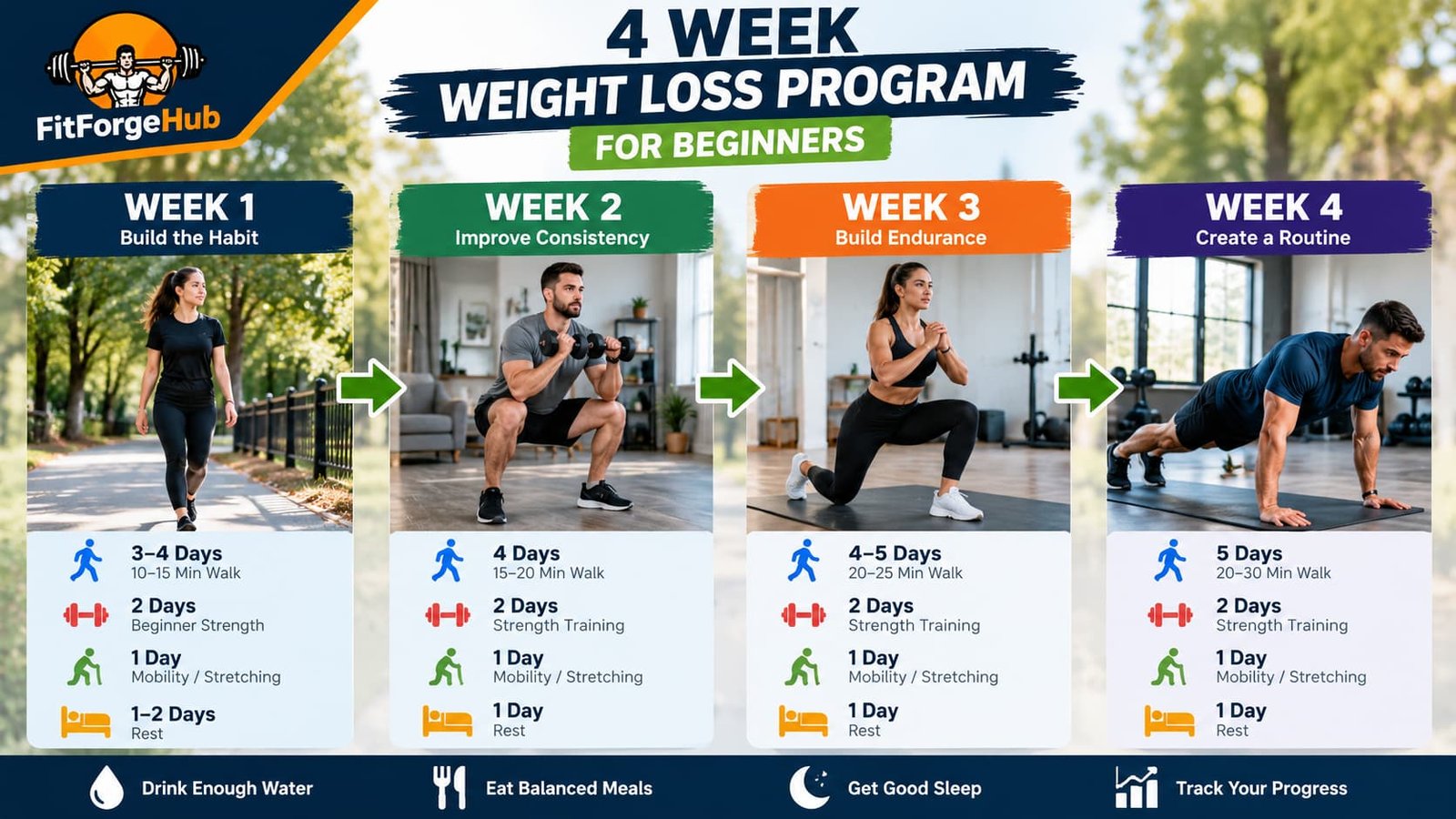
This four-week program is designed to help adults build a routine rather than chase a particular number on the scale. The walking times are starting suggestions, not requirements. Adjust them based on your current fitness and comfort.
Begin each strength session with approximately five minutes of easy movement. Finish with a gentle cool-down. Rest whenever needed, and use a chair or wall for support when appropriate.
Week 1: Build the Habit
The first week focuses on manageable movement and becoming more aware of everyday food choices.
| Day | Activity | Nutrition Habit |
|---|---|---|
| Monday | 10–15 minute walk | Include vegetables at dinner |
| Tuesday | Beginner strength workout | Include a protein source at meals |
| Wednesday | 10–15 minute walk | Choose water more often |
| Thursday | Rest or gentle mobility | Review portion sizes |
| Friday | Beginner strength workout | Plan a balanced lunch |
| Saturday | 15 minute comfortable walk | Include fruit or vegetables |
| Sunday | Rest | Plan meals for the next week |
Week 2: Improve Consistency
Continue two strength sessions and aim for four walks of approximately 15–20 minutes if the previous week felt manageable.
Keep the focus on balanced meals. Rather than changing everything at once, choose one habit that needs improvement, such as reducing frequent sugary drinks or preparing lunch at home.
Week 3: Gradually Increase Activity
If you are recovering comfortably, try four or five walks lasting around 20–25 minutes. Maintain two strength sessions on nonconsecutive days.
Pay attention to your energy, recovery, and technique. If fatigue increases or joints become uncomfortable, maintain your current activity level instead of adding more.
Week 4: Establish a Repeatable Routine
Work toward a schedule that fits your life. This might include five walks of 20–30 minutes, two strength sessions, and regular meal planning.
Adults are generally encouraged to work toward at least 150 minutes of moderate-intensity aerobic activity weekly, plus muscle-strengthening activity on two days. This is a longer-term health target, not a deadline every beginner must meet by week four.
You can review the CDC physical activity guidance for more information about building activity gradually.
Strength Training During Weight Loss
Strength training can help maintain muscle while you lose weight. This matters because the goal of a weight loss program should be to improve overall health and fitness, not simply reduce the number on the scale.
Beginners can include two manageable strength sessions per week, with enough recovery between sessions. Choose exercises that match your fitness level and focus on controlled movement rather than lifting heavy weights. You can follow our Full Body Dumbbell Workout for Beginners for detailed exercise instructions.
Healthy Eating Plan for Weight Loss
Nutrition plays a central role in weight management. The goal is to choose foods that provide adequate nutrients while helping you manage your overall energy intake.
The National Institute of Diabetes and Digestive and Kidney Diseases recommends a sustainable eating pattern that includes vegetables, fruits, whole grains, protein-rich foods, and healthy fats.
Build a Balanced Plate
A simple visual starting point is to fill roughly half your plate with vegetables, one quarter with a protein-rich food, and one quarter with whole grains or another starchy food. Add suitable healthy fats and adjust portions according to your needs.
This method is a flexible planning tool, not a rigid prescription. People with different energy requirements, medical conditions, or athletic goals may need different portions.

Sample Day of Balanced Meals
| Meal | Example | Purpose |
|---|---|---|
| Breakfast | Oatmeal, plain yogurt, and berries | Fiber, protein, and energy |
| Lunch | Chicken or beans, brown rice, and vegetables | Balanced protein and carbohydrates |
| Snack | Fruit with a small portion of nuts | Convenient nutrients and satisfaction |
| Dinner | Fish or tofu, potatoes, and mixed vegetables | Protein and a balanced evening meal |
These are meal examples, not a calorie-controlled prescription. Portion sizes and additional snacks should depend on individual needs, hunger, and activity.
Simple Nutrition Habits That Help
- Include protein-rich foods in regular meals.
- Eat a variety of vegetables and whole fruits.
- Choose whole grains when practical.
- Drink water regularly and limit frequent sugary beverages.
- Notice portions of energy-dense snacks and sauces.
- Prepare convenient meals for busy days.
- Allow flexibility rather than labeling foods as forbidden.

When Should You Expect Weight Loss Results?
Weight loss does not happen at the same rate for everyone. Changes in body water, digestion, sodium intake, hormones, and physical activity can cause short-term fluctuations on the scale.
Some beginners notice improvements in stamina, sleep, or exercise confidence before seeing major weight changes. These improvements are meaningful signs of progress.
Four weeks is a useful period for reviewing your routine, but it may be too early to judge your overall results. Focus on improvements in activity, strength, energy, and consistency rather than expecting a specific change in body weight.
How to Track Progress
Choose a few useful measurements rather than relying on daily scale changes alone:
- Body weight measured under similar conditions, if appropriate.
- Walking duration and comfort.
- Strength workout repetitions and technique.
- Energy levels and sleep consistency.
- How regularly you follow planned meals and activity.
Review your progress over several weeks. If you have not followed the plan consistently, focus on making it easier to maintain before making it more demanding.
Are Intermittent Fasting and the 30 30 30 Rule Necessary?
Popular diet trends can make weight loss seem more complicated than it needs to be. Neither intermittent fasting nor the 30-30-30 rule is essential for successful weight management.
Intermittent Fasting
Intermittent fasting limits eating to certain periods. Some people find this helps organize meals or reduce unplanned snacking. Others experience excessive hunger, difficulty exercising, or problems fitting the schedule into daily life.
It is not automatically superior to other balanced eating approaches. The overall eating pattern, nutritional adequacy, and ability to maintain the routine remain important.
Fasting may be inappropriate for people who are pregnant, have a history of eating disorders, or use medications affected by meal timing. Professional guidance is important in these situations.
The 30 30 30 Rule
The 30-30-30 method typically suggests consuming 30 grams of protein within 30 minutes of waking and completing 30 minutes of low-intensity exercise.
Protein and regular movement can be useful, but there is insufficient evidence that this exact timing combination produces special weight loss benefits. Beginners do not need to follow the rule to make progress.
Common Weight Loss Mistakes to Avoid
Trying to Change Everything Immediately
Starting a strict diet and an intense workout routine on the same day can be difficult to sustain. Begin with two or three realistic changes and build gradually.
Using Exercise to Compensate for Every Meal
Exercise should support health and fitness, not act as punishment for eating. A sustainable plan includes both enjoyable movement and balanced nutrition.
Expecting Daily Scale Changes
Weight can fluctuate even when you are following your plan. Look at longer-term patterns and improvements in daily habits.
Ignoring Sleep and Stress
Irregular sleep and ongoing stress can affect appetite, motivation, and the ability to maintain healthy routines. Aim for consistent sleep and include manageable ways to relax.
How to Maintain Weight Loss Over Time
Maintaining weight loss requires habits that remain realistic after the initial motivation fades. Rather than treating the four-week plan as a temporary challenge, use it to discover which routines you can continue.
Keep a regular activity schedule, make nutritious foods convenient, and adjust portions as your needs change. If you miss a workout or have an unplanned meal, return to your usual routine at the next opportunity.
For additional beginner exercise guidance, read our How to Start Working Out at Home for Beginners guide.
People who need additional support can consider a registered dietitian or a healthcare professional experienced in weight management.
Frequently Asked Questions
What is the best weight loss program for beginners?
Choose a program that fits your health needs, daily schedule, food preferences, and current fitness level. Avoid plans that promise rapid results or require extreme restrictions.
Can I lose weight without going to the gym?
Yes. Walking, home strength exercises, and changes in eating habits can support weight management without a gym membership.
How many days should beginners exercise?
There is no fixed number for everyone. Start at a level you can recover from comfortably, then increase your activity gradually as your fitness improves.
Do I need to stop eating carbohydrates?
No. Whole grains, fruits, beans, and other carbohydrate-containing foods can be part of a balanced eating plan. Overall portions and food quality matter more than eliminating an entire nutrient group.
Is walking enough for weight loss?
Walking is a useful starting activity, but combining it with balanced eating and strength training can provide a more complete approach to weight management.
How much weight can I lose in four weeks?
There is no reliable amount that applies to everyone. Your starting weight, eating habits, activity level, health, and consistency all affect the result. Focus on sustainable changes instead of trying to reach a fixed number in four weeks.
Should I try HIIT as a beginner?
High-intensity interval training is not necessary for weight loss. Beginners can build a strong fitness foundation through walking and manageable strength exercises before considering more demanding workouts.
What if my weight stops changing?
Review your progress over several weeks, including food habits, physical activity, sleep, and consistency. If you have concerns or an unexplained change in weight, seek individualized professional guidance.
Final Thoughts
The best weight loss programs for beginners are not built around punishment, extreme restrictions, or promises of immediate results. They provide a realistic structure for eating well, moving regularly, maintaining muscle, and developing habits that can last.
Use the four-week plan as a starting point, adjust it to your ability, and focus on consistency rather than perfection. A routine that supports your health and fits your life is the foundation of sustainable progress.
About the Author
Riaz Ahmed
Riaz Ahmed holds a Master’s degree in Health and Physical Education and is the founder of FitForgeHub, where he shares practical fitness and workout information.