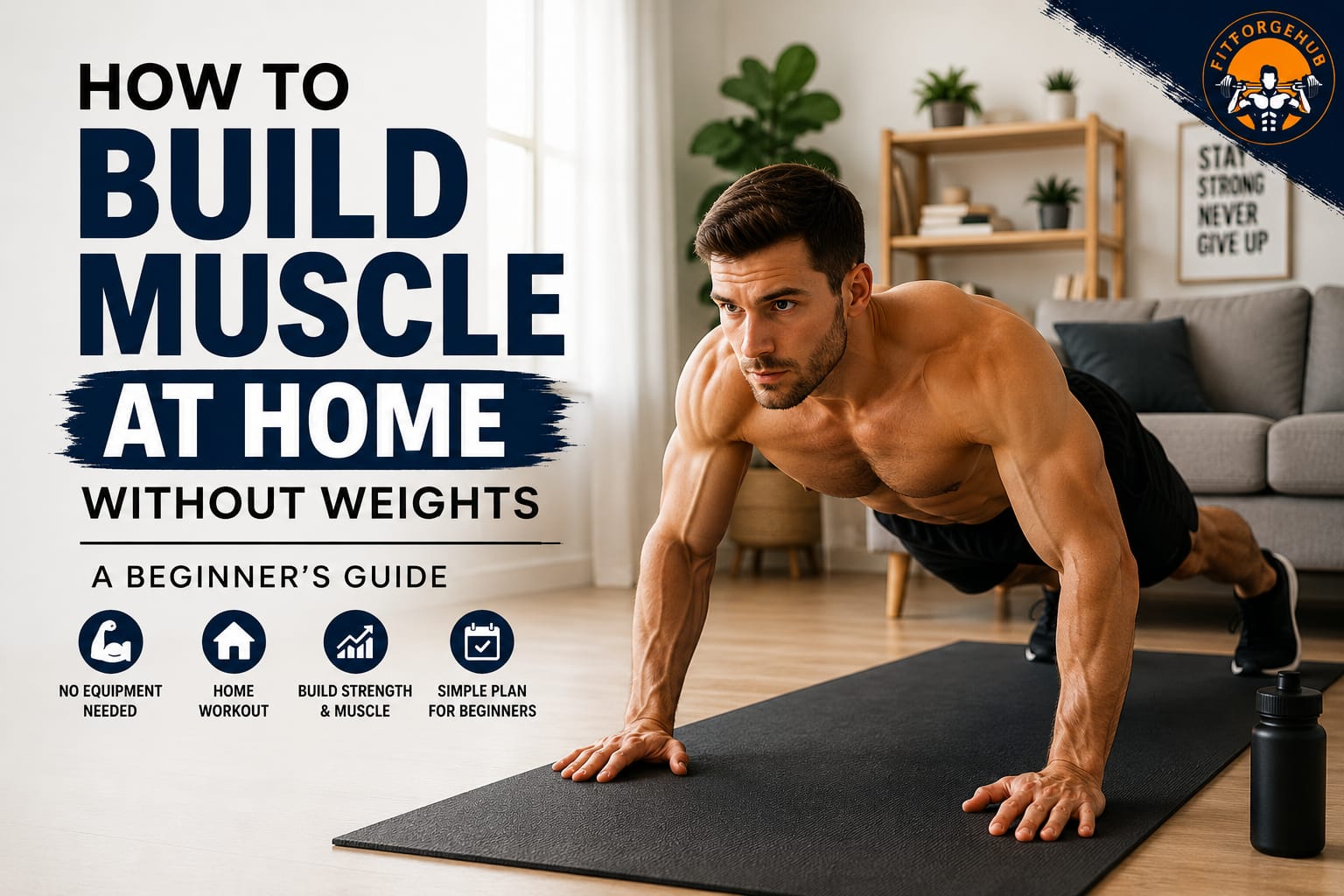
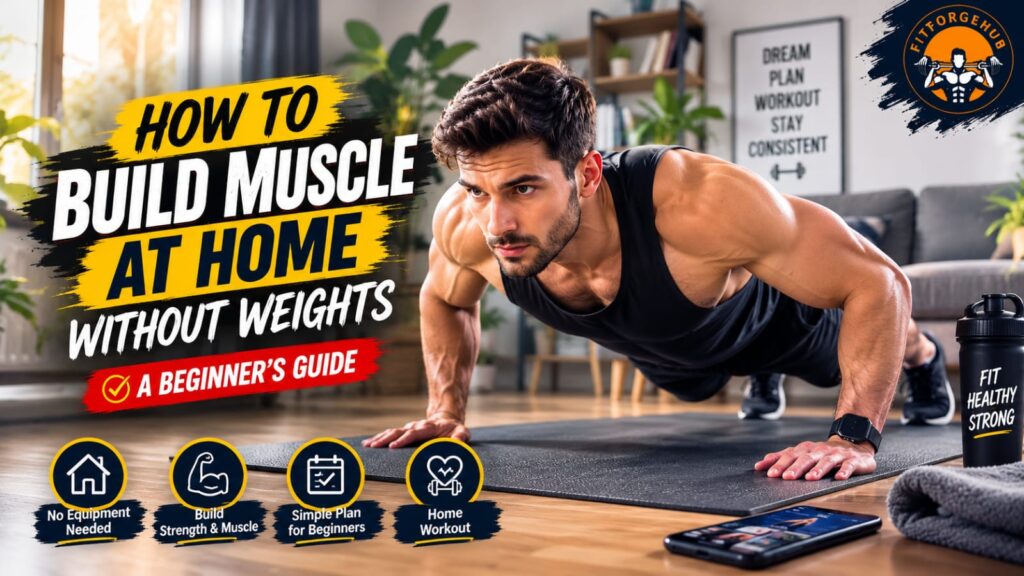
Building muscle does not always require a gym membership or expensive equipment. With the right exercises, proper nutrition, and consistent training, you can build strength and muscle at home using your body weight.
This beginner-friendly guide explains how to build muscle at home without weights, which exercises to perform, how often to train, and what to eat to support muscle growth.
Table of Contents
Can You Build Muscle at Home Without Weights?
Best Bodyweight Exercises for Muscle Growth
Beginner Home Muscle-Building Workout
How to Make Bodyweight Workouts More Effective
How Often Should You Train at Home?
What Should You Eat to Build Muscle?
Why Protein Matters for Muscle Growth
Common Mistakes to Avoid
How Long Does It Take to Build Muscle at Home?
Final Thoughts
Frequently Asked Questions
Can You Build Muscle at Home Without Weights?
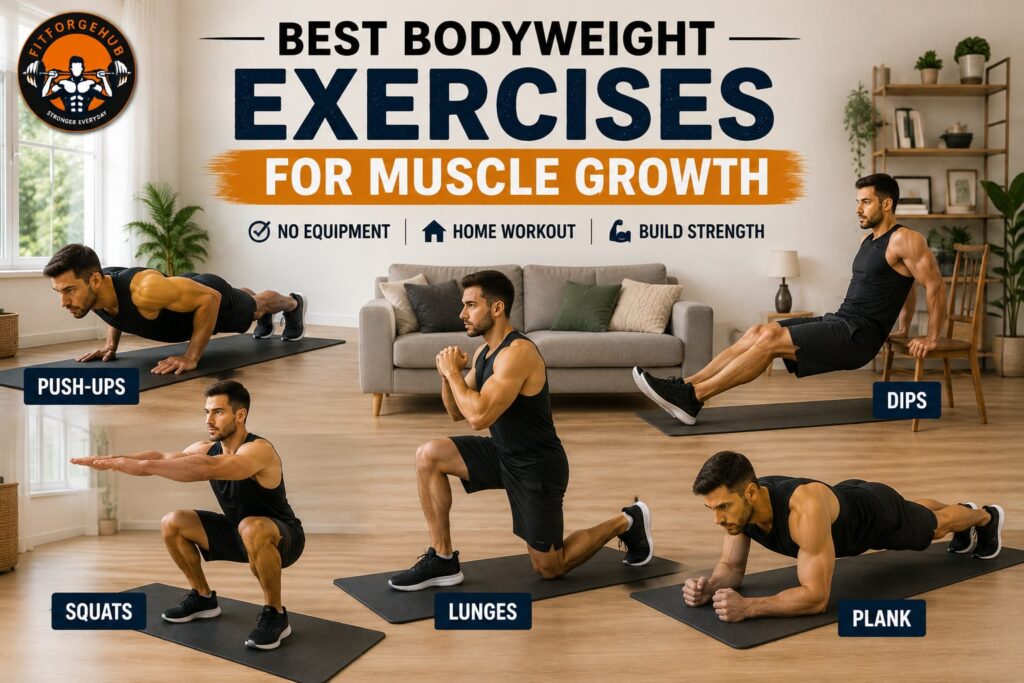
Yes, you can build muscle at home without weights. Bodyweight exercises such as push-ups, squats, lunges, dips, and planks can challenge your muscles and help improve strength.
The key is progressive overload. As your body becomes stronger, you need to gradually make your exercises more challenging by increasing repetitions, sets, difficulty, or training control.
You do not need to start with advanced exercises. Begin with movements you can perform correctly and gradually increase the challenge.
With the right exercises, proper nutrition, and consistent training, you can build strength and muscle at home using your body weight.
[Best Home Workout Plan for Beginners (No Equipment): Complete Step-by-Step Guide (2026)]
Best Bodyweight Exercises for Muscle Growth
1. Push-Ups
Push-ups are one of the best bodyweight exercises for developing the chest, shoulders, and triceps.
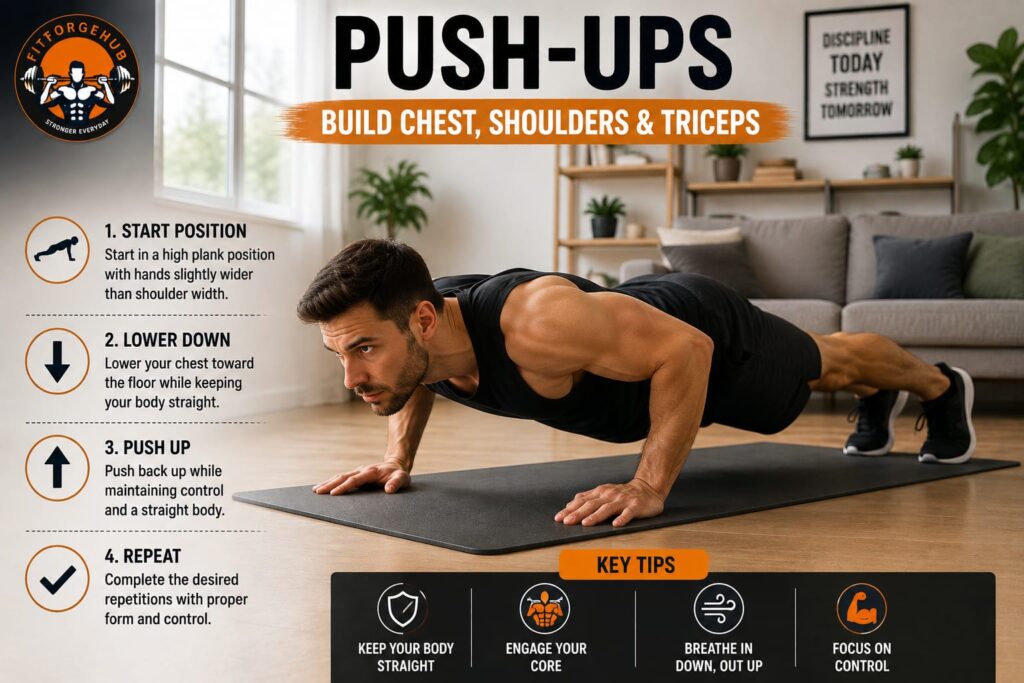
How to perform:
- Start in a high plank position.
- Keep your hands slightly wider than shoulder width.
- Lower your chest toward the floor.
- Keep your body straight.
- Push back up while maintaining control.
Beginner target: 3 sets of 8–12 repetitions.
If regular push-ups are difficult, start with incline or knee push-ups.
2. Bodyweight Squats
Squats primarily train the legs and glutes while also improving lower-body strength.
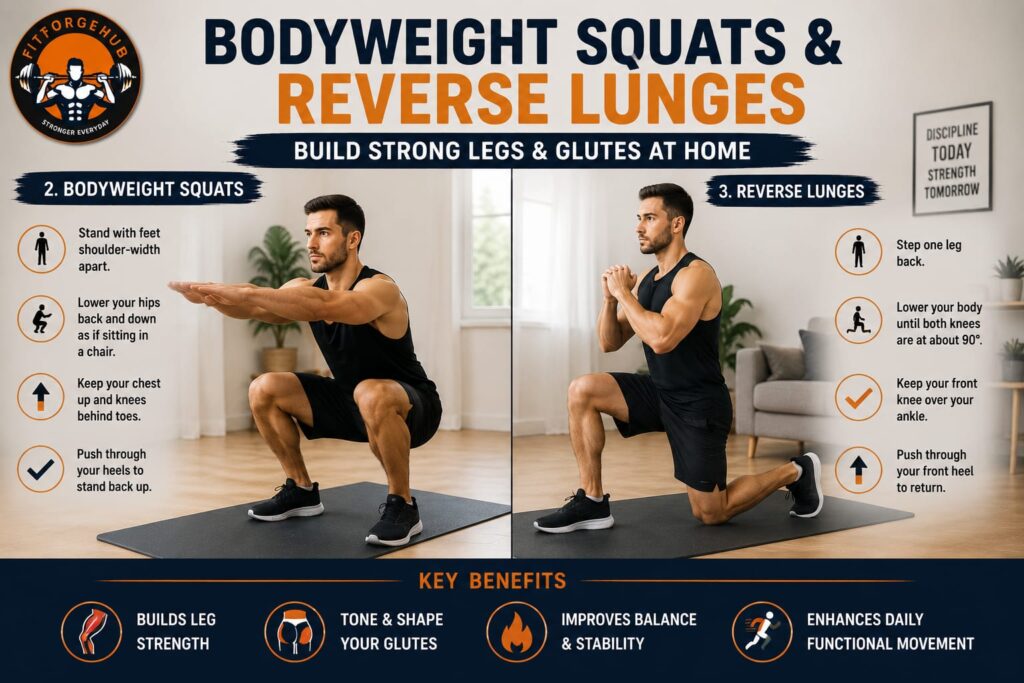
How to perform:
- Stand with your feet around shoulder width apart.
- Keep your chest upright.
- Bend your knees and push your hips back.
- Lower your body comfortably.
- Push through your feet to return to the starting position.
Beginner target: 3 sets of 12–15 repetitions.
3. Reverse Lunges
Reverse lunges are useful for training the legs individually and improving balance.
Beginner target: 3 sets of 8–12 repetitions per leg.
Keep your front knee controlled and maintain good posture throughout the movement.
4. Chair Dips
Chair dips can target the triceps and shoulders. Only use a strong, stable chair that will not move during the exercise.
Beginner target: 2–3 sets of 6–12 repetitions.
If you feel shoulder discomfort, stop the exercise and choose another triceps movement.
5. Glute Bridges
Glute bridges focus on the glutes and can also strengthen the muscles around the hips.
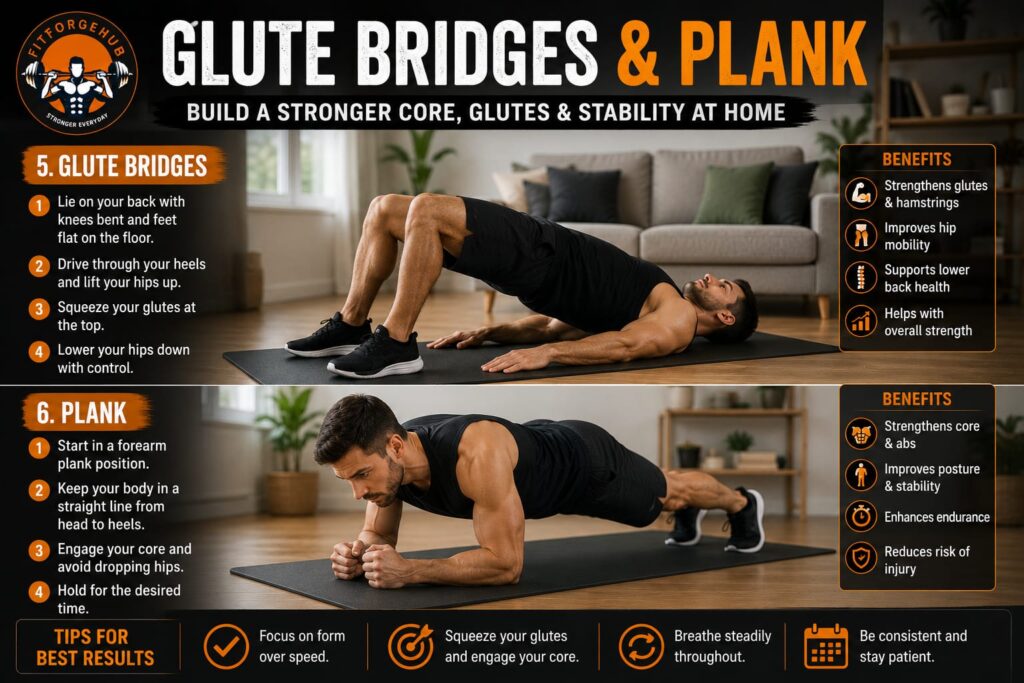
Beginner target: 3 sets of 12–15 repetitions.
Pause briefly at the top of each repetition and avoid rushing through the movement.
6. Plank
Planks help strengthen the core and improve overall body stability.
Beginner target: 3 sets of 20–40 seconds.
Focus on keeping your body in a straight line rather than simply holding the position for as long as possible.
Beginner Home Muscle-Building Workout
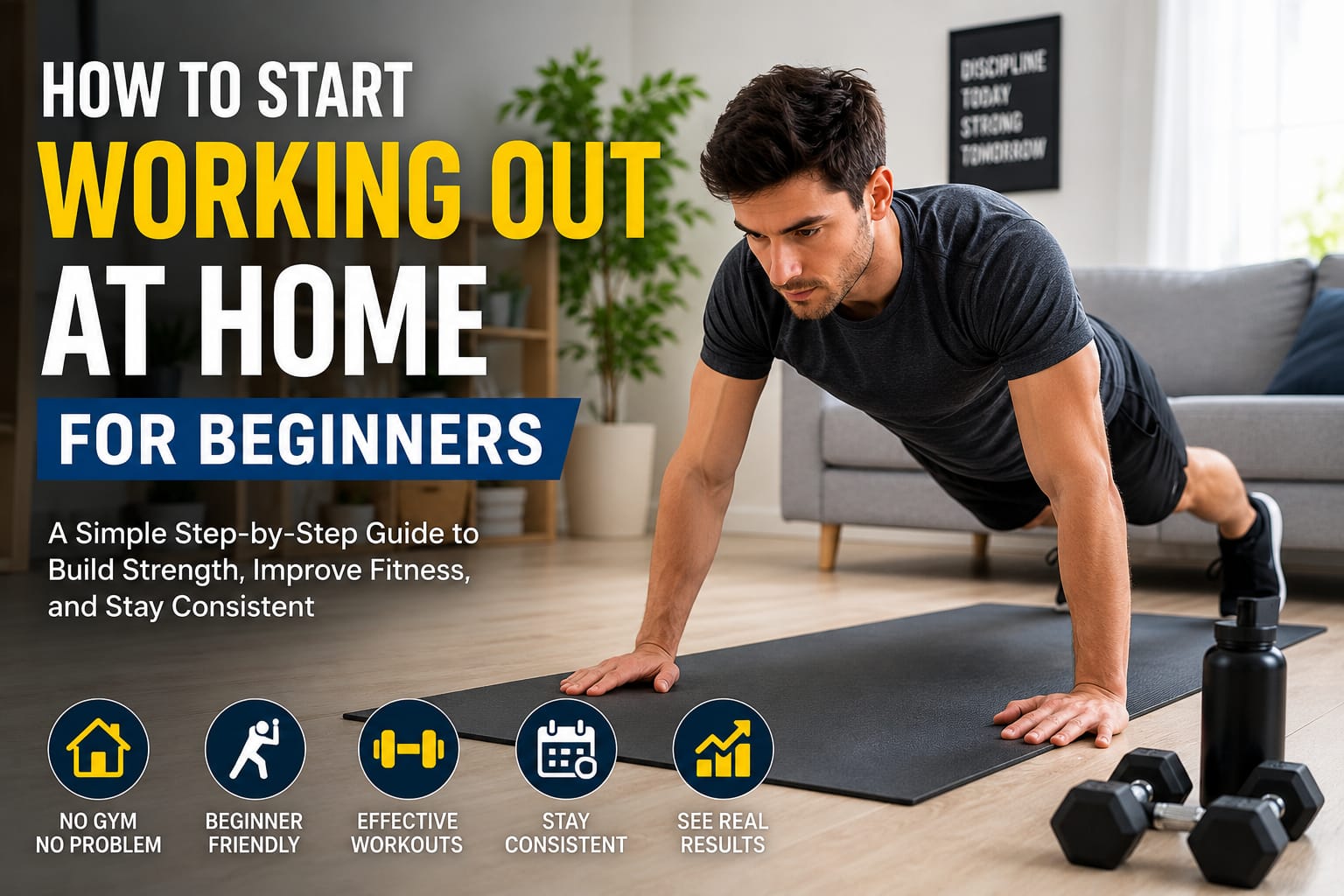
If you are new to structured training, you can also follow our Beginner Gym Workout Plan: 3 Days a Week for a simple weekly routine.
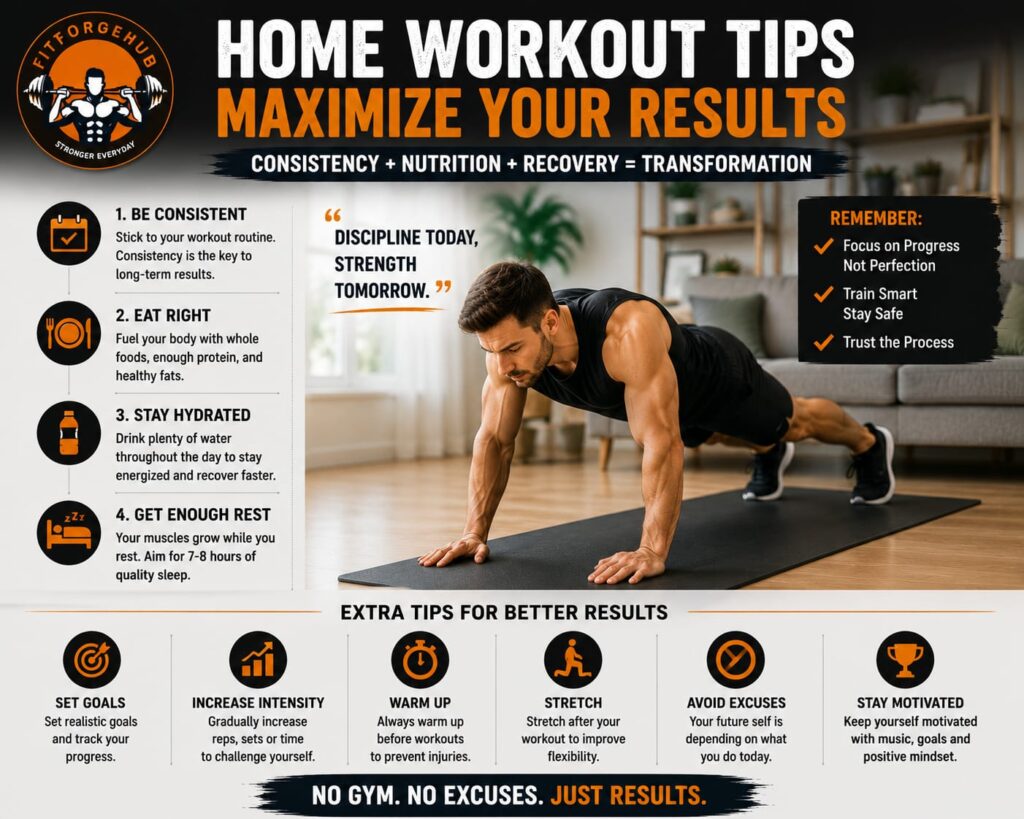
You can combine these exercises into a simple full-body workout.
| Exercise | Sets | Reps |
| Push-Ups | 3 | 8–12 |
| Bodyweight Squats | 3 | 12–15 |
| Reverse Lunges | 3 | 8–12 each leg |
| Glute Bridges | 3 | 12–15 |
| Chair Dips | 2 | 6–12 |
| Plank | 3 | 20–40 seconds |
Rest for about 60–90 seconds between sets. Beginners can start with 3 workouts per week and allow recovery days between sessions.
How to Make Bodyweight Workouts More Effective
If you perform the same workout at the same intensity for months, your progress may eventually slow down.
Use progressive overload by gradually making the workout harder.
For example, you can:
- Increase repetitions.
- Add another set.
- Slow down the lowering phase.
- Use a more difficult exercise variation.
- Reduce unnecessary rest between exercises.
- Improve your exercise technique and range of motion.
For example, you might progress from incline push-ups to knee push-ups, then regular push-ups, and eventually more challenging push-up variations.
How Often Should You Train at Home?
For beginners, three full-body workouts per week can be a practical starting point.
For example:
Monday: Full-body workout
Tuesday: Rest or light activity
Wednesday: Full-body workout
Thursday: Rest
Friday: Full-body workout
Saturday: Light activity or rest
Sunday: Rest
Recovery is an important part of muscle development. Your body needs time to repair and adapt after training.
Beginners who want a structured month-long routine can also follow our 30-Day Beginner Workout Plan: Build Strength & Muscle Step by Step.
What Should You Eat to Build Muscle?
your goal is to gain muscle and body weight, consistently eating enough total calories is important.
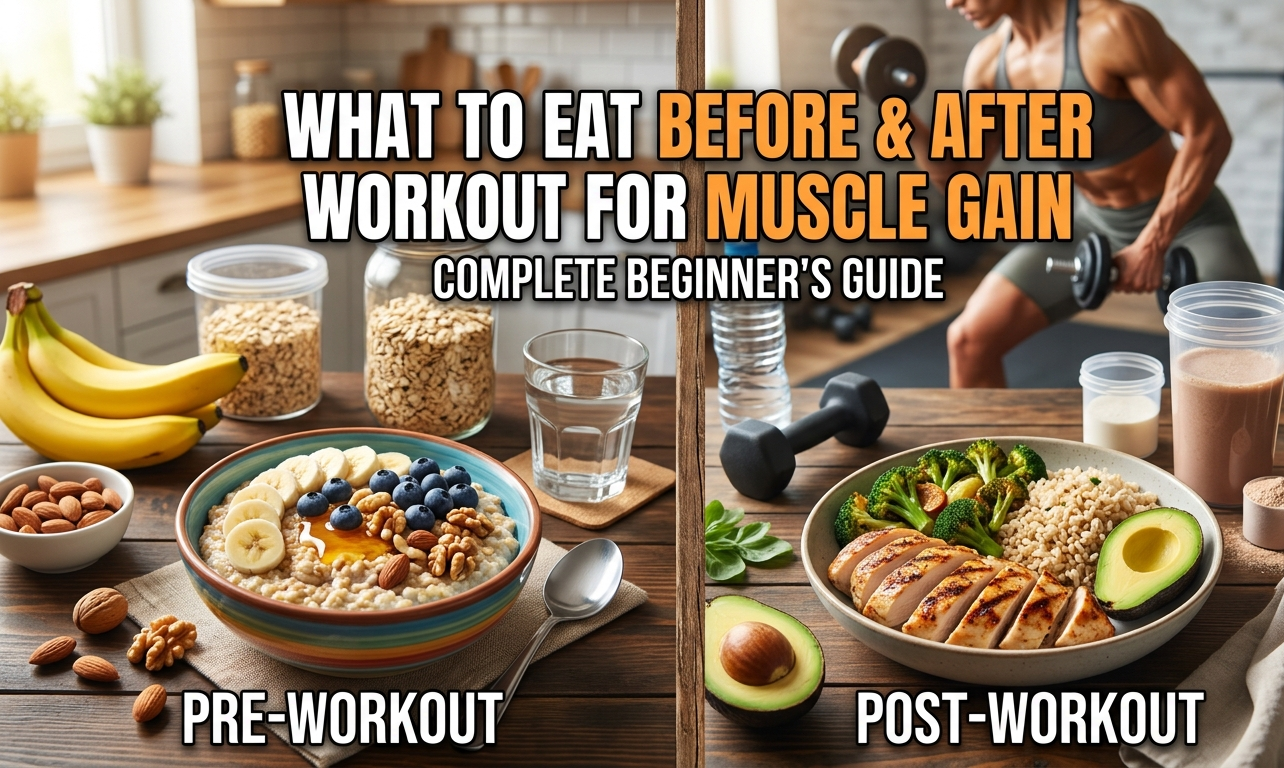
What to Eat Before and After Workout for Muscle Gain: Complete Beginner’s Guide
Exercise is only one part of muscle growth. Your diet also matters.
Make sure your meals contain good sources of protein such as:
- Eggs
- Chicken
- Fish
- Milk and yogurt
- Beans and lentils
- Lean meat
- Nuts and seeds
- Other protein-rich foods
You should also eat a balanced diet that includes carbohydrates, healthy fats, fruits, and vegetables.
If your goal is to gain muscle and body weight, consistently eating enough total calories is important. A small calorie surplus may help support muscle growth when combined with resistance training.
Why Protein Matters for Muscle Growth
Protein provides amino acids that your body uses to build and repair muscle tissue.
Instead of relying on one large protein-heavy meal, include protein sources throughout your day.
For people who exercise regularly, individual protein needs can vary depending on body size, activity level, age, and overall goals.
Common Mistakes to Avoid
Training Every Day Without Recovery
More exercise is not always better. Your muscles need recovery, especially after challenging resistance workouts.
Doing Too Many Repetitions With Poor Form
Quality is more important than simply chasing a high repetition number. Perform each exercise with controlled movement and proper technique.
Changing Your Workout Every Few Days
Constantly changing exercises can make it difficult to measure progress. Follow a structured routine long enough to see whether you are getting stronger.
Ignoring Nutrition
A good workout plan cannot completely compensate for poor nutrition. Eat balanced meals and make protein-rich foods part of your regular diet.
Expecting Overnight Results
Building muscle takes time. Consistency with training, nutrition, sleep, and recovery is more important than looking for quick results.
How Long Does It Take to Build Muscle at Home?
Muscle growth does not happen overnight. Beginners may notice improvements in strength relatively quickly, while visible physical changes usually require consistent training over a longer period.
Your results can depend on factors such as:
- Training consistency
- Nutrition
- Sleep and recovery
- Genetics
- Starting fitness level
- Exercise intensity
- Overall calorie and protein intake
Focus on gradual progress rather than comparing your results with someone else.
Final Thoughts
Learning how to build muscle at home without weights is a practical way to start strength training. Exercises such as push-ups, squats, lunges, glute bridges, chair dips, and planks can provide an effective beginner workout.
Start with a manageable routine, focus on proper form, gradually increase the difficulty, and support your training with a balanced diet and enough recovery.
Most importantly, stay consistent. Small improvements made week after week can lead to significant progress over time.
Frequently Asked Questions
Can I build muscle without going to the gym?
Yes. Bodyweight resistance exercises can help beginners develop strength and muscle without a traditional gym.
How many days a week should beginners work out?
Three full-body strength workouts per week can be a good starting point for many beginners.
Do I need protein supplements to build muscle?
No. Protein supplements are not essential. Many people can meet their protein needs through a balanced diet containing protein-rich foods.
Can I build muscle with only bodyweight exercises?
Yes, especially as a beginner. However, as you become stronger, you may need more challenging exercise variations or additional resistance to continue progressing.
Is home training good for beginners?
Yes. Home workouts can be convenient, affordable, and effective when exercises are performed with proper technique and a structured progression plan.
Author
About the Author
Written by the FitForgeHub team.
FitForgeHub provides fitness and workout information designed to help beginners understand exercise, strength training, nutrition, and healthy fitness habits.
Medical disclaimer: The information provided on FitForgeHub is for general educational purposes and should not replace individualized medical advice, diagnosis, or treatment.
2 thoughts on “How to Build Muscle at Home Without Weights: A Beginner’s Guide”