Starting an exercise routine can feel overwhelming when you have not been physically active for a long time. You might worry about getting tired too quickly, choosing the wrong workout, or finding enough time to exercise. Walking offers a simple way to become more active without requiring gym equipment or complicated movements.
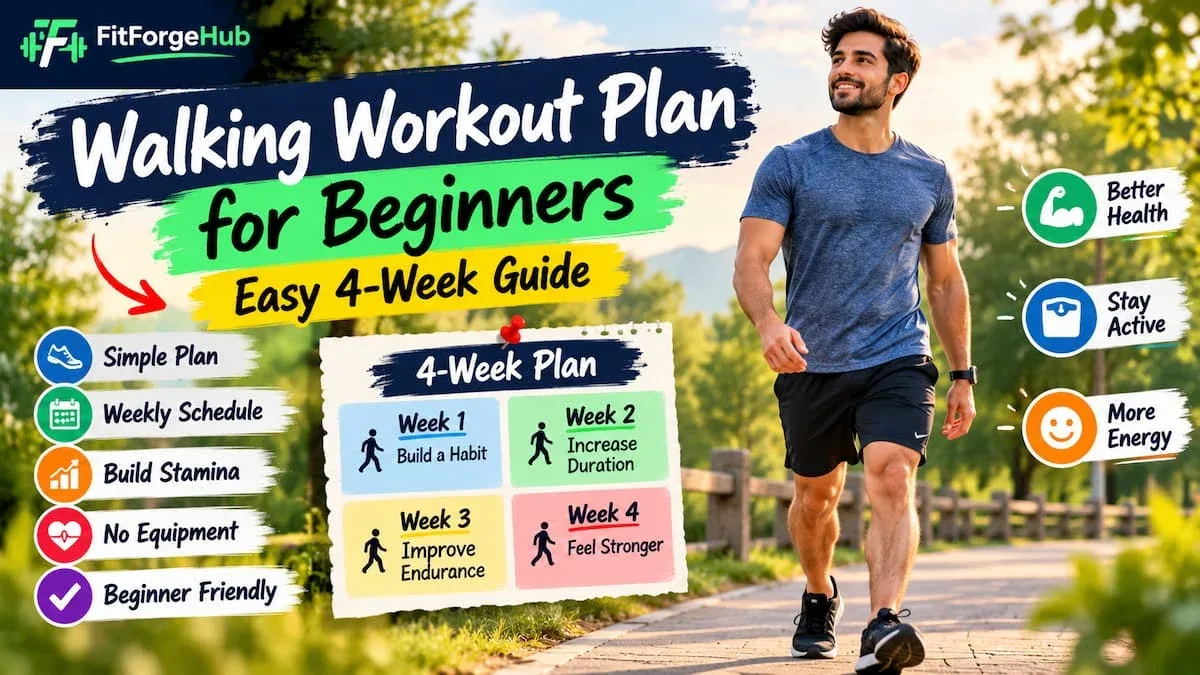
This walking workout plan for beginners provides a practical four-week schedule that starts with short sessions and gradually increases walking time. You will learn how to choose a comfortable pace, organize your weekly walks, track progress, and avoid common mistakes. Whether you prefer walking outdoors or indoors, the goal is to build a routine that fits your current ability and daily schedule.
What Is a Walking Workout Plan for Beginners?
A walking workout plan for beginners is a structured schedule designed to help inactive adults introduce regular physical activity into their lives. Instead of immediately attempting long walks or fast-paced cardio, the plan begins with manageable sessions and builds gradually.
The schedule focuses on walking duration, recovery, consistency, and comfortable movement. It does not require a particular step count, walking speed, or expensive fitness tracker.
For example, someone who has been inactive may begin with a ten-minute walk around the neighborhood. After several comfortable sessions, that person can gradually increase the time spent walking.
If you need other low-impact options, explore our Beginner Workout Plan for Overweight People.
Why Should Beginners Start Walking?
Walking is one of the most accessible ways to increase physical activity. You can control the intensity, select a convenient location, and adjust the duration to match your current fitness level.
Unlike many structured workouts, walking does not require learning complicated techniques. Most people can begin with comfortable movement and gradually develop endurance.
Regular walking may help improve cardiovascular fitness, support daily mobility, and contribute to a more active lifestyle. It can also be combined with strength training when you feel ready.
Another advantage is flexibility. You can walk before work, during a lunch break, or after dinner. A realistic schedule is easier to maintain than one that constantly conflicts with daily responsibilities.
Benefits of Walking at a Glance
| Benefit | Why It Matters |
|---|---|
| Cardiovascular fitness | Brisk walking can improve aerobic endurance over time. |
| Accessibility | Walking requires little equipment and can be adjusted to different abilities. |
| Daily movement | Short sessions provide opportunities to reduce prolonged inactivity. |
| Weight management | Walking can contribute to energy expenditure as part of a broader routine. |
| Consistency | A flexible schedule can make regular physical activity easier to maintain. |
These benefits develop at different rates. A walking workout plan for beginners should focus on building sustainable habits rather than promising rapid weight loss or dramatic changes within one month.
How to Prepare for Your First Walk

Choose Comfortable Walking Shoes
Wear shoes that fit properly and feel supportive. Footwear that causes rubbing or discomfort can make walking unpleasant and may discourage you from continuing.
Select a Safe Walking Location
Choose a route with reasonably even surfaces, suitable lighting, and minimal obstacles. A nearby park, quiet sidewalk, or indoor walking area may be suitable.
Start With an Easy Pace
Walk slowly enough that you can speak comfortably. Your first sessions should help you become familiar with regular movement rather than leave you exhausted.
Warm Up Before Increasing Speed
Begin each session with two or three minutes of gentle walking. If you feel comfortable, gradually settle into your preferred pace. Slow down again near the end.
Before following the walking workout plan for beginners, remember that ten minutes is a suggestion, not a minimum requirement. Starting with five minutes or shorter sessions is reasonable if needed.
Complete 4-Week Walking Workout Plan
This four-week schedule includes five walking days and two recovery days. Each week increases the duration by five minutes per session, provided the previous week feels manageable.

Week 1: Build the Walking Habit
Your first week is about consistency. Focus on completing short walks at a comfortable pace without worrying about speed or distance.
| Day | Activity | Duration |
|---|---|---|
| Monday | Easy walk | 10 minutes |
| Tuesday | Easy walk | 10 minutes |
| Wednesday | Recovery | Rest |
| Thursday | Easy walk | 10 minutes |
| Friday | Easy walk | 10 minutes |
| Saturday | Easy walk | 10 minutes |
| Sunday | Recovery | Rest |
Weekly walking total: 50 minutes.
Pay attention to how your feet, legs, and breathing feel. If ten minutes is difficult, shorten the sessions and gradually build toward the suggested duration.
Week 2: Increase Your Walking Time
During the second week, increase each walk to fifteen minutes if your first week went comfortably. Keep the same five-day schedule.
| Day | Activity | Duration |
|---|---|---|
| Monday | Comfortable walk | 15 minutes |
| Tuesday | Comfortable walk | 15 minutes |
| Wednesday | Recovery | Rest |
| Thursday | Comfortable walk | 15 minutes |
| Friday | Comfortable walk | 15 minutes |
| Saturday | Comfortable walk | 15 minutes |
| Sunday | Recovery | Rest |
Weekly walking total: 75 minutes.
If a continuous fifteen-minute walk feels challenging, you can divide it into shorter sessions. For example, walking for ten minutes in the morning and five minutes later still contributes to your activity.
Week 3: Develop Walking Endurance
Week three introduces twenty-minute walks. Maintain a steady pace and avoid trying to increase speed and duration aggressively at the same time.
| Day | Activity | Duration |
|---|---|---|
| Monday | Steady walk | 20 minutes |
| Tuesday | Steady walk | 20 minutes |
| Wednesday | Recovery | Rest |
| Thursday | Steady walk | 20 minutes |
| Friday | Steady walk | 20 minutes |
| Saturday | Steady walk | 20 minutes |
| Sunday | Recovery | Rest |
Weekly walking total: 100 minutes.
At this stage, your usual route may begin to feel easier. However, progress differs from person to person. Repeat week two if you need additional time.
Week 4: Build a Sustainable Routine
During week four, aim for twenty-five-minute sessions if your previous walks have felt manageable. Continue taking recovery days and walking at a comfortable pace.
| Day | Activity | Duration |
|---|---|---|
| Monday | Steady walk | 25 minutes |
| Tuesday | Steady walk | 25 minutes |
| Wednesday | Recovery | Rest |
| Thursday | Steady walk | 25 minutes |
| Friday | Steady walk | 25 minutes |
| Saturday | Steady walk | 25 minutes |
| Sunday | Recovery | Rest |
Weekly walking total: 125 minutes.
Completing this walking workout plan for beginners gives you a useful foundation for regular physical activity. You can maintain the same schedule for additional weeks instead of immediately attempting longer or faster walks.
How Fast Should Beginners Walk?
There is no single walking speed that works for everyone. The right pace depends on your fitness level, mobility, age, walking surface, and how you feel during the session.
A simple way to assess intensity is the talk test. At a moderate intensity, you can generally talk but would find singing difficult. If you struggle to speak comfortably, slow down.
During the early weeks, prioritize comfortable movement. Once you can complete the suggested duration consistently, consider increasing your pace gradually.
When Is the Best Time to Walk?
The best time to walk is the time you can follow consistently. Morning walks may suit people with busy afternoons, while evening walks may work better for those who prefer exercising after work.
Weather and safety are also important. During hot weather, choose cooler hours. If outdoor conditions are unsafe, consider walking indoors instead.
Consistency matters more than the exact time of day. Your walking workout plan for beginners should fit your schedule rather than create unnecessary pressure.
How to Walk Indoors
Indoor walking can be useful during bad weather or when you do not have access to a suitable outdoor route.
Use a Treadmill
Begin at a comfortable speed with a flat incline. Use the treadmill safety features and avoid choosing a pace that forces you to hold the rails continuously.
Walk Around Your Home
If you have a safe indoor route, walk between rooms or along a hallway. Remove clutter and avoid slippery surfaces.
Split Your Sessions
You can divide a longer session into two or three shorter walks. This approach may be easier for people with limited time or lower initial endurance.
How to Track Walking Progress
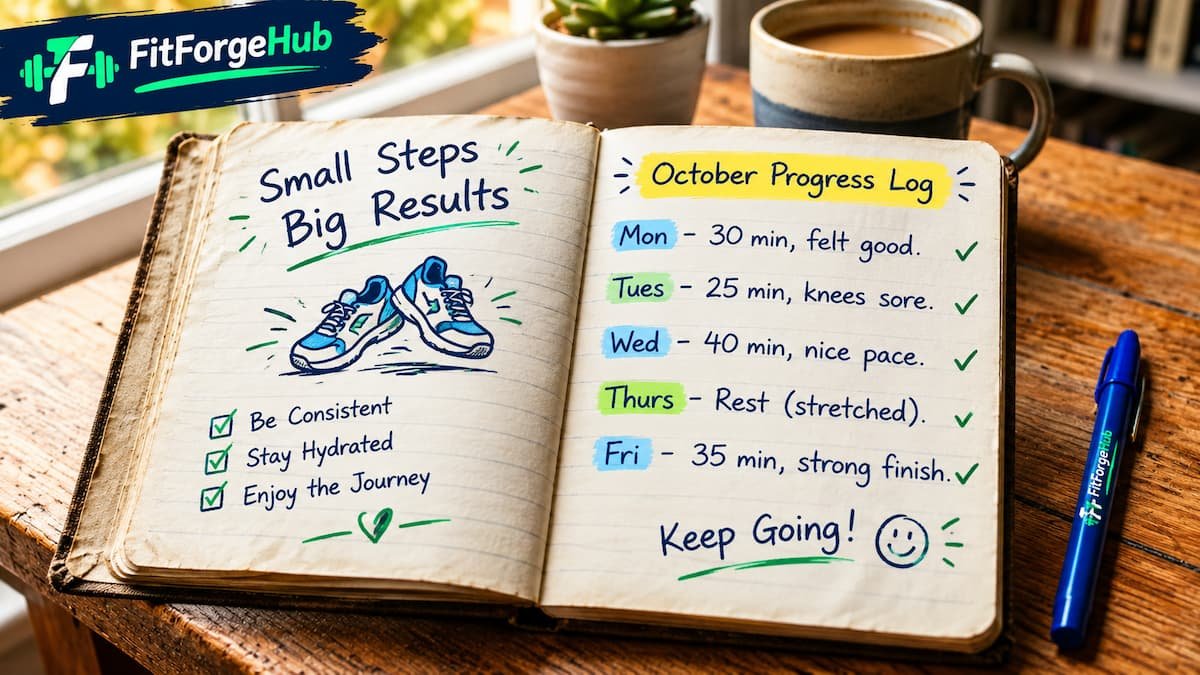
You do not need an expensive fitness tracker to monitor your routine. A simple notebook, calendar, or phone timer is enough.
| Progress Marker | Example |
|---|---|
| Walking time | 15 minutes |
| Effort level | Easy or moderate |
| Comfort | No unusual discomfort |
| Consistency | Five sessions completed |
| Recovery | Ready for the next walk |
For a walking workout plan for beginners, tracking consistency and comfort may be more helpful than focusing only on calories or step counts.
Small improvements matter. You may notice that familiar routes feel easier, your confidence increases, or walking becomes a normal part of your day.
Common Walking Mistakes to Avoid
Starting With Long Sessions
Trying to walk for an hour on your first day may leave you unnecessarily fatigued. Begin with a manageable duration and progress gradually.
Walking Too Fast
A faster pace is not automatically better. If your breathing becomes uncomfortable or you feel unusually exhausted, slow down.
Ignoring Persistent Pain
Sharp or ongoing discomfort should not be treated as proof that exercise is working. Adjust your activity and seek appropriate professional advice.
Skipping Recovery Days
Recovery days can help beginners adjust to increased activity. Resting does not mean you are losing progress.
Expecting Rapid Weight Loss
Walking can support weight management, but changes depend on several factors, including nutrition and overall activity. Avoid expecting a guaranteed result after four weeks.
Quitting After Missing a Day
Missing a session is normal. Resume at a comfortable level instead of attempting to make up every missed minute.
What to Do After Four Weeks
After completing the walking workout plan for beginners, you can continue walking for twenty-five minutes per session or gradually increase selected walks to thirty minutes.
The Centers for Disease Control and Prevention recommends that adults aim for at least 150 minutes of moderate-intensity aerobic activity each week, along with muscle-strengthening activity on two days.
This is a longer-term goal rather than a requirement for your first month. If your walks are at a light intensity, they may not all count toward the moderate-intensity recommendation.
When you feel ready to introduce resistance exercises, read our Complete Dumbbell Workout Guide for Beginners.
For broader home fitness guidance, explore Build Muscle at Home: Complete Beginner Guide.
Frequently Asked Questions
Is 10 minutes of walking enough for beginners?
Ten minutes can be a reasonable starting point. If that feels difficult, begin with a shorter session and gradually increase the duration.
Can beginners walk every day?
Some people can comfortably walk daily, but beginners do not need to. This plan includes two recovery days to help make the routine manageable.
Can walking improve stamina?
Regular walking can improve aerobic endurance over time. Results vary depending on your starting fitness level, consistency, and walking intensity.
Is walking suitable for overweight beginners?
Walking can be a practical low-impact activity for many people with higher body weights. The appropriate duration and pace depend on individual comfort, mobility, and health considerations.
Do I need to walk 10,000 steps every day?
No. A fixed step target is not necessary when starting exercise. Focusing on manageable walking time can be more practical.
What if I cannot complete a 20-minute walk?
Shorten the session, divide it into smaller walks, or repeat an earlier week. Progressing at your own pace is more useful than forcing a difficult target.
Can I combine walking with strength training?
Yes. Walking and strength training support different aspects of fitness. Add resistance exercises gradually and allow sufficient recovery.
Final Thoughts
Starting a fitness routine does not require expensive equipment, intense cardio, or complicated training schedules. Walking provides an accessible way to become more active while allowing you to adjust the effort to your current abilities.
This walking workout plan for beginners offers a practical foundation for developing consistency, gradually increasing endurance, and building confidence with regular movement. Focus on comfortable progress, use recovery days when needed, and continue with a schedule you can maintain beyond the first four weeks.
References
Centers for Disease Control and Prevention: Adult Activity Guidelines
About the Author
Disclaimer
This article provides general fitness education and does not replace individualized medical advice. If you have an injury, medical condition, or concerns about beginning an exercise program, consult a qualified healthcare professional before starting. Stop exercising if you experience chest pain, dizziness, sharp pain, or other concerning symptoms.